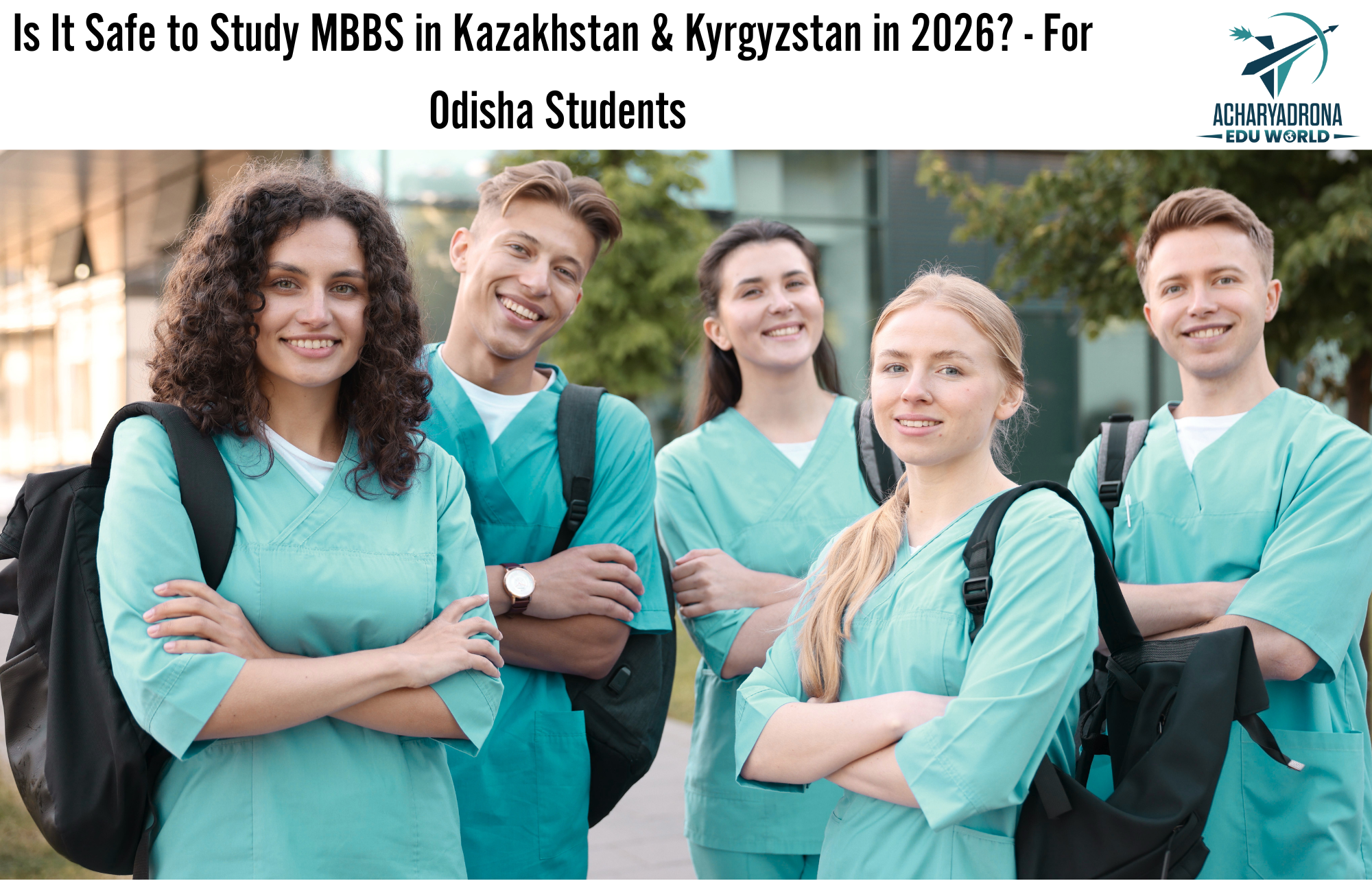
Is It Safe to Study MBBS in Kazakhstan & Kyrgyzstan in 2026? – For Odisha Students
A Real, Ground Level Safety, Geopolitical & Lifestyle Perspective for Indian Students
When parents reach out to us today to discuss MBBS abroad, the conversation almost always starts the same way. Not with fees, not with rankings or not even with recognition. The first question is almost always about safety.
And honestly, we understand why.
The world in 2026 feels very different from what it did a decade ago. There are ongoing geopolitical tensions, news about conflicts in different parts of the world, and social media forwards that often exaggerate situations without context. Every parent has seen at least one alarming message that begins with Someone’s cousin’s friend said…and ends with panic.
So when countries like Kazakhstan or Kyrgyzstan are mentioned, the reaction is natural, Central Asia? Isn’t that close to conflict zones? Isn’t that risky?
Instead of brushing this concern aside or giving you marketing lines, let’s sit down and talk about this calmly and realistically. Not as admission agents trying to fill seats, but as people who have spent years guiding Indian families, watching students live there, graduate, return, and build careers.
Admission Helpline: 7978940093/7605908430
Why Safety Has Become the Most Important Question for MBBS Abroad
Ten or fifteen years ago, parents usually asked about:
- Medical council recognition
- Coaching support
- Hostel facilities
- Food availability
Today, the focus has shifted completely.
Parents are worried about their child’s life and well-being, not just their degree. And that’s exactly how it should be. MBBS is a long journey , usually 5 to 6 years, including internship. You are trusting another country with some of the most important years of your child’s life.
So yes, safety isn’t just a factor anymore. It’s the foundation of the decision.


What experience has taught us is this:
Choosing the right country and the right city matters far more than choosing the cheapest option.
A low-fee university in an unstable environment will cost you sleepless nights. On the other hand, even a reputed university in a region affected by conflict is not worth the anxiety.
This is why it’s important to separate headlines from ground reality especially when talking about Kazakhstan and Kyrgyzstan.
Understanding Kazakhstan & Kyrgyzstan:
First, let’s clear a very common misconception.
Kazakhstan and Kyrgyzstan are not remote, lawless, or isolated countries.
Both are independent Central Asian republics with functioning governments, stable administrative systems, and long histories of hosting international students. Thousands of Indian students have been studying here for over a decade. Kazakhstan is the larger and more economically developed of the two. Cities like Almaty have modern infrastructure, wide roads, metros, shopping centres, and a lifestyle that feels surprisingly close to European cities. Kyrgyzstan is smaller and less commercialized, but that doesn’t make it unsafe. The capital city, Bishkek, has been a dedicated student hub for years, especially for medical education.
Most importantly:
- Neither country is at war
- Neither has active military conflict within student cities
- Neither has instability that affects daily student life
That context is essential before judging them based on geography alone.
Current Geopolitical Situation: Facts vs Fear
Let’s address the most direct concern very clearly.
There is no war in Kazakhstan or Kyrgyzstan in 2026.
There are no airstrikes or curfews or military deployment in student areas.
Yes, the world has geopolitical tensions. Yes, Central Asia can be indirectly affected by economic changes, currency fluctuations, or international relations just like India is affected by global oil prices or trade decisions.
But these countries are not conflict zones, you may hear about:
- Occasional political protests
- Diplomatic disagreements
- Border-related issues far away student cities
These events exist, but they do not interfere with student life in Bishkek or Almaty.
Think of it this way, India has protests, border tensions, and political movements too. But does that make cities like Pune, Bangalore, or Chennai unsafe for students? No.
Distance, context, and ground reality matter far more than dramatic headlines.
City-Level Safety: Where Students Actually Live
This is where real clarity comes in because students don’t live in countries, they live in cities.
Bishkek, Kyrgyzstan
Bishkek is the primary destination for Indian MBBS students in Kyrgyzstan.
It’s a quiet, organized city with a strong student presence. Many parents are surprised when they hear this, but Bishkek is actually quite uneventful, and that’s a good thing. Nothing dramatic happens here.
Indian Students typically:
- Live in university hostels or nearby accommodations
- Use public transport daily
- Visit cafes, parks, and local markets
- Study, attend classes, and live normal student lives
The local attitude towards Indian students is generally positive. Over the years, the city has adapted to international students:
- Indian restaurants are available
- Indian grocery items can be found
- A supportive Indian student community already exists
Safety perception:
Bishkek is considered one of the safer capitals in Central Asia. Street crime is relatively low, especially around university areas. Women students generally feel comfortable moving around during the day.
Cost of living:
Monthly expenses, including food, transport, and basic needs, usually range between ₹15,000 to ₹20,000, depending on lifestyle.
Almaty, Kazakhstan
Almaty is larger, more modern, and more cosmopolitan, if Bishkek feels like a calm student town, Almaty feels like a developing metropolitan city. It has:
- Better roads
- A functioning metro system
- Shopping malls and international brands
- Strong public services
The city used to seeing international students, so Indian students don’t attract unnecessary attention.
Safety:
Almaty ranks well within regional safety indexes. It is a major education and business hub, which means better policing, emergency services, and administrative stability.
Cost of living:
Slightly higher than Bishkek around ₹20,000 to ₹25,000 per month but with better infrastructure and city conveniences.
Economy & Cost of Living: A Student’s Reality
From a student’s perspective, what matters is simple:
Can I live comfortably? Can my family manage expenses without stress? In both Kazakhstan and Kyrgyzstan, the answer is yes.
Daily living costs are manageable for Indian middle-class families. You’re not dealing with European or American price levels.
To give a realistic idea:
- A local cafe meal: ₹150–₹250
- Public transport: affordable and reliable
- Hostel accommodation usually included in university packages
Currency fluctuations happen everywhere, but they don’t disrupt daily student life.
Is There Any War or Military Threat for Students?
This question comes up repeatedly, so it deserves repetition. No. There is no war there is no military threat in student cities , any border tensions that occur are far away from where students live and study. Students in Bishkek or Almaty do not experience disruptions, sirens, or emergency situations.
Life continues normally classes, exams, festivals, and daily routines go on year after year.
Culture, Religion & Social Life
Both Kazakhstan and Kyrgyzstan are secular countries with Muslim majority populations, but religion is personal and not imposed.
Students of all faiths live freely. There is no pressure to follow local religious practices, culturally, these countries have strong Russian and Soviet-era influences. Russian is more commonly spoken than English in daily life, which is why learning basic Russian helps. However:
- Medical education is in English
- Universities provide English-speaking coordinators
- Many coordinators understand Hindi or Indian students concerns
Social life is calm and respectful. Students celebrate Indian festivals, including Diwali, and generally live like students anywhere else in the world.
How Indian Students Should Live Respectfully
Safety is a two-way responsibility. Students also need to behave responsibly.
Some simple but important points:
- Keep the city clean don’t litter
- Follow traffic rules discipline is taken seriously
- Speak politely aggressive behaviour isn’t appreciated
- Dress respectfully be mindful of local culture
- Be punctual , locals value time
Respect local laws what’s normal in India may not be normal elsewhere.
This isn’t about losing your identity. It’s about being a respectful guest in another country.
Practical Safety Advice for Indian MBBS Students
Every student should:
- Register with the Indian Embassy upon arrival
- Keep documents updated and carry copies
- Avoid political gatherings or protests
- Follow hostel and transport rules
- Stay in regular contact with university coordinators These are basic steps, but they make a big difference.
Conclusion: Is It Safe in 2026?
Yes. Kazakhstan and Kyrgyzstan are safe, stable, and student-friendly for MBBS in 2026 when chosen wisely. Fear often comes from lack of information. When you speak to students already studying there, or parents whose children have graduated, the story is very different from online rumours. Safety also depends on choosing the right university, right city, and right guidance.
How Acharyadrona Supports Students & Families
We don’t just help students go abroad we help them settle, adapt, and stay safe.
Our support includes:
- University and city selection based on safety and budget
- Complete documentation assistance
- Pre-departure guidance on real-life expectations
- Ongoing student support through local coordinators
We guide, not pressure. Because at the end of the day, your child’s safety and future matter more than anything else.
Visit: www.acharyadrona.com
Contact: 7978940093/7605908430