
Structural Analysis and Ranking of Engineering Institutions in India: A Comprehensive Tier-Based Evaluation for the 2025-2026 Academic Cycle
The landscape of technical education in India has undergone a transformative shift as it enters the 2025-2026 admission cycle. With over 15.5 lakh aspirants competing for limited seats across elite institutions, the classification of colleges into “Tiers” has become an essential, albeit unofficial, framework for students, parents, and recruiters to navigate institutional quality and career potential. This hierarchical stratification is primarily driven by metrics such as entrance exam competitiveness, placement benchmarks, research output, and industry perception. While the government provides a structured evaluation through the National Institutional Ranking Framework (NIRF), the market operates on a more nuanced tier system that reflects the long-term career trajectory and Return on Investment (ROI) afforded to graduates.
Helpline Number: 7978940093/7605908430
The current era is characterized by a “Skill-First” economy, where institutional pedigree is increasingly being balanced against demonstrable technical competence. However, the institutional “tag” remains a significant determinant of entry-level opportunities, particularly in high-stakes sectors like High-Frequency Trading (HFT), management consulting, and core research and development. This report provides an exhaustive analysis of the four-tier classification of engineering colleges, examining the characteristics, placement realities, and strategic shifts defining each level of technical education in India, while also integrating cross-disciplinary insights for educational consultancies like Acharyadrona Edu World regarding international medical licensing pathways.
Theoretical Framework for Institutional Tiering
The classification of engineering institutions into tiers is an unofficial but widely accepted methodology used to group colleges with similar performance indicators. While NIRF rankings provide a data-backed starting point, tiers encompass the “invisible curriculum“—factors like peer quality, alumni network strength, and the density of corporate collaborations that direct rankings often struggle to quantify. Search engines do not formally recognize the labels of Tier 1 or Tier 2, but they evaluate the behavioural patterns of pages and institutional entities through authority and trust signals.
The NIRF Evaluative Parameters and-Metrics
The National Institutional Ranking Framework (NIRF), established by the Ministry of Education, evaluates colleges across five critical dimensions. For the 2025 cycle, these parameters carry specific weightages that influence an institution’s national standing. The framework has expanded from a few categories in 2016 to 16 categories in 2024, reflecting the increasing complexity of the Indian educational ecosystem.
| Parameter Group | Weightage | Critical Sub-Parameters | Functional Objective |
|---|---|---|---|
| Teaching, Learning & Resources (TLR) | 30% | Faculty-Student Ratio (FSR), Faculty with PhD (FQE), Financial Resource Utilization (FRU) | To assess the foundational quality of instruction and available academic resources. |
| Research and Professional Practice (RP) | 30% | Publications (PU), Citations (QP), IPR/Patents, Funded Projects (FPPP) | To measure research output and industry innovation contribution. |
| Graduation Outcomes (GO) | 20% | Placement & Higher Studies (PHE), University Exams (GUE), Median Salary (MS), PhD Output | To evaluate student success in placements and academics. |
| Outreach and Inclusivity (OI) | 10% | Regional Diversity (RD), Women Diversity (WD), ESCS | To assess diversity and equitable access in the institution. |
| Perception (PR) | 10% | Peer Perception (Academic & Employers) | To capture institutional reputation among academics and industry. |
The interaction between these parameters creates a “tiering effect.” High scores in TLR and RP typically lead to high Perception, which in turn attracts premium recruiters, thereby improving GO.
Defining the Market-Driven Tier Hierarchy
Beyond the government metrics, the market (recruiters and aspirants) operates on a more granular tier system. This hierarchy dictates the “Day Zero” placement schedules and the nature of roles offered to graduates.
Tier 1 (The Elite): These are the globally recognized benchmarks of Indian education. They feature acceptance rates often below 1% for the most coveted branches. They are characterized by massive government or corpus funding, world-class faculty with international research footprints, and an ecosystem that supports high-frequency trading firms and top-tier global consultancies.
Tier 2 (Highly Reputed): These institutions provide high-quality education and infrastructure but may lack the intense global perception or research funding of the top-tier IITs. This tier includes the “newer” IITs, mid-range NITs, and elite private universities that have built strong national brands over several decades.
Tier 3 (Regional Leaders): Comprising the majority of engineering colleges, these are often regional private colleges or newer state-affiliated institutions. They rely heavily on a “Skill-First” model where students must proactively seek certifications and projects outside the standard curriculum to compete for high-paying roles.
Tier 4 (Local Institutions): These are typically small, local colleges with limited web presence, high faculty turnover, and significant placement challenges. The degree from such an institution functions primarily as a basic legal requirement for employment, with minimal institutional support for career progression.
Tier 1 Institutions: The Global Elite and National Powerhouses
Tier 1 colleges represent the absolute pinnacle of Indian engineering. These institutions are the primary beneficiaries of government funding and global partnerships, creating an ecosystem that fosters innovation and leadership.
The Old IIT Dominance and NIRF Stability
The “Old IITs“—specifically Madras, Delhi, Bombay, Kanpur, Kharagpur, Roorkee, and Guwahati—consistently occupy the top spots in every ranking framework. Their dominance is rooted in a balanced performance across academics, research, and student outcomes.
| College Name | NIRF 2025 Rank | State | Median Package (Projected) | Top Recruiter Sectors |
|---|---|---|---|---|
| IIT Madras | 1 | Tamil Nadu | ₹17.50 LPA | R&D, Tech, Core, Deep-Tech |
| IIT Delhi | 2 | Delhi | ₹20.50 LPA | Consulting, Software, Finance, Entrepreneurship |
| IIT Bombay | 3 | Maharashtra | ₹21.00 LPA | HFT, AI Research, Quant, Finance |
| IIT Kanpur | 4 | Uttar Pradesh | ₹18.00 LPA | Semiconductors, Analytics, Aerospace |
| IIT Kharagpur | 5 | West Bengal | ₹19.76 LPA | Tech, Core, Logistics, Metallurgy |
| IIT Hyderabad | 7 | Telangana | ₹19.50 LPA | Core Engineering, Data Science, AI |
IIT Madras has retained its top position for the tenth consecutive year in the engineering category, a feat attributed to its exceptional score in Teaching and Learning Resources (95.70/100) and its role as a pioneer in technology incubation. The financial resources of these institutions are immense; for instance, IIT Kharagpur manages an annual budget exceeding ₹1,135 crore, which facilitates the maintenance of cutting-edge research facilities that Tier 3 and 4 institutions cannot replicate.
Elite NITs and Specialized Hubs
Not every National Institute of Technology (NIT) qualifies as Tier 1. The designation is reserved for a select few that have historically outperformed the others in terms of recruiter trust and research citation.
NIT Tiruchirappalli (NIT Trichy): Ranked 9th in NIRF 2025, it is the undisputed leader of the NIT system. It offers a superior ROI due to moderate tuition fees (approximately ₹5-6 lakhs for four years) and average packages of ₹12-16 LPA, with CSE branches often exceeding ₹25 LPA.
NIT Karnataka (Surathkal) and NIT Warangal: These institutions are powerhouses for core engineering and coding cultures. NIT Surathkal is particularly famous for its strong tech placements and beach-side campus infrastructure.
IIIT Hyderabad: Often termed the “Coding Mecca,” it represents a specialized Tier 1 institution focusing strictly on Computer Science and Electronics. It operates on a purely merit-based model with no quotas, delivering a median package of ₹30-32 LPA, rivaling the best IITs for software roles.
Tier 2 Institutions: The Rising Powerhouses and Regional Benchmarks
The Private Sector Surge and Global Collaborations
Elite private universities have successfully scaled their operations to offer diverse specializations and robust domestic placement records. Institutions such as BITS Pilani, VIT Vellore, and SRM IST have invested heavily in international collaborations to elevate their global standing.
| Private Institute | NIRF 2025 Rank | Total Course Fees (Approx.) | Highest Placement Package | Key Strength |
|---|---|---|---|---|
| BITS Pilani | 11 | ₹21 – 25 Lakhs | ₹60 LPA+ | No attendance policy, strong startup culture |
| VIT Vellore | 16 | ₹7 – 15 Lakhs | ₹1.02 Crore | 500+ foreign university tie-ups |
| SRM IST | 14 | ₹11 – 19 Lakhs | ₹65 LPA | Multidisciplinary research, strong alumni network |
| Thapar Institute | 29 | ₹16 – 20 Lakhs | ₹55 LPA | High-end infrastructure, North India leader |
| Manipal (MIT) | 59 | ₹16 – 19 Lakhs | ₹57 LPA | World-class infrastructure, holistic development |
BITS Pilani remains in a league of its own, often categorized as Tier 1 by many recruiters despite its private status. Its multi-campus ecosystem (Pilani, Goa, Hyderabad) maintains an average B.Tech package of approximately ₹28.5 LPA, outperforming several newer IITs and many legacy NITs.
Strategic State and Central Universities
State-funded universities often represent the “Golden Ticket” for domicile students, offering elite placements at a fraction of the cost of private universities.
Jadavpur University (Kolkata): Undisputedly the ROI leader in India. With a total fee structure that can be as low as ₹10,000 for the entire four-year program, it delivers median packages of ₹9 LPA and average CSE packages exceeding ₹22 LPA.
VJTI Mumbai and COEP Pune: These legacy institutions benefit from their proximity to the massive industrial and financial hubs of Maharashtra. VJTI attracts major financial institutions like JP Morgan and Morgan Stanley, paying premium salaries for tech roles.
Delhi Technological University (DTU) and NSUT: These are high-priority targets for students in the Delhi-NCR region, known for their strong coding cultures and proximity to the national capital’s tech ecosystem.
Placement Dynamics in Tier 2
Tier 2 institutions often face the “volume challenge,” where batch sizes are significantly larger than in Tier 1. Consequently, competition for the top 10% of offers is intense. While Tier 1 institutes see 80-90% placement rates with average salaries of ₹12-25 LPA, Tier 2 colleges typically maintain placement rates of 50-75% with average offers in the ₹5-12 LPA range.
| Aspect | Tier 1 Characteristics | Tier 2 Characteristics |
|---|---|---|
| Eligibility | Strict no-backlog policies, high academic thresholds | More lenient; focus on specific branch performance |
| Recruiters | Global product-based giants, HFTs, MBB consultancies | Mid-tier MNCs, IT services, large Indian conglomerates |
| Interview Format | Multiple technical rounds, system design, case studies | Primarily HR and aptitude; focused on fundamentals |
| Alumni Impact | Global influential network; structured mentorship | Emerging network; strong regional placement pipelines |
Tier 3 and Tier 4 Institutions: The Reality of the “Skill-First” Economy
Tier 3 and 4 institutions comprise the largest segment of engineering education in India, housing hundreds of thousands of students. In 2026, this sector is facing a profound disruption caused by the integration of AI in hiring and the reduction of entry-level mass hiring by major IT firms.
The Employability Deficit and the Tier 3 Placement Crisis
A sobering reality for 2026 is that nearly 42.6% of Indian graduates are deemed “unemployable” or “not job-ready” by recruiters. This gap is most acute in Tier 3 colleges where the curriculum often lags 3-5 years behind current industry standards in AI, MLOps, and Cloud Security.
Mass Hiring Slump: Traditional “bulk” recruiters like TCS, Infosys, and Wipro have reduced entry-level hiring by 20-25% due to AI automation. This has left Tier 3 colleges, which previously relied on these giants, in a placement crisis.
The Placement Gap: Only about 30% to 50% of students in Tier 3 colleges secure campus placement offers, a sharp contrast to the 90%+ rates found in Tier 1 institutes.
Salary Reality: The average starting salary for Tier 3 graduates typically ranges from ₹2.5 LPA to ₹4.5 LPA, often barely covering the interest on education loans.
The Meritocracy Surge and the Off-Campus Roadmap
Despite the institutional limitations, the “AI Revolution” has democratized access to high-end skills. Global tech leaders like NVIDIA, Apple, and Zoho report that 34% of their workforce now comes from Tier 3 colleges. This indicates that for the “proactive” student, the college tier is becoming less of a barrier.
The AI Filter: Standard resumes are increasingly rejected by AI-based Applicant Tracking Systems (ATS). Students are now encouraged to build “Skill Clusters”—real-world project experience hosted on GitHub or Be hance.
Off-Campus Dominance: Roughly 60% of high-paying roles for Tier 3 graduates are now filled through referrals and direct off-campus applications rather than campus visits.
The “Super Dream” Anomaly: High-achieving Tier 3 students are securing packages of ₹20-30 LPA by focusing on niche specializations like Cloud Security, Platform Engineering, and AI Infrastructure.
Tier 4: Local Challenges and city-Level Realities
Tier 4 institutions represent the “long tail” of Indian technical education. They often lack permanent faculty, structured placement cells, and even basic necessities like modernized laboratories or reliable IT setups.
Placement Packages: Average packages are typically between ₹1.5 LPA and ₹5 LPA, with most students finding employment in local regional businesses or government bodies.
Faculty Constraints: Many subjects are taught by ad-hoc or junior faculty who may lack deep pedagogical or industrial experience.
Regulatory Hurdles: Many such institutions struggle to meet the minimum requirements of the UGC or AICTE, and fewer than 25% of all higher education institutions in India are even NAAC accredited.
Deep Dive: The Engineering Ecosystem of Odisha
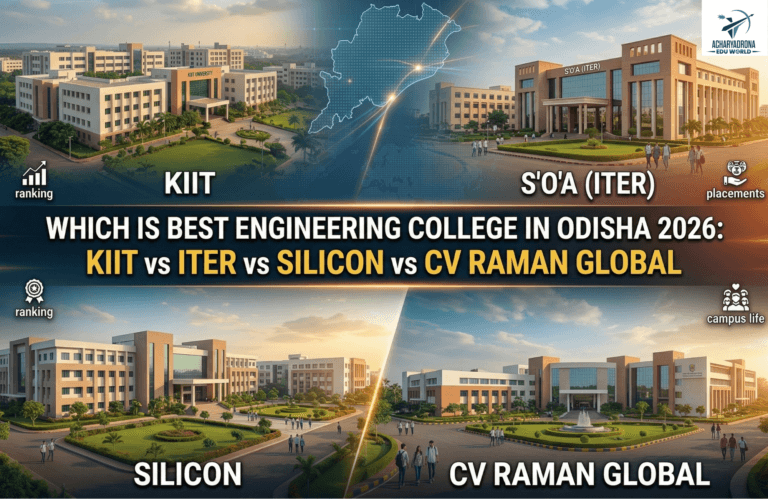
Odisha has emerged as a significant regional cluster for technical education, offering a microcosm of the national tiering system. The state hosts approximately 276 engineering colleges, with the capital, Bhubaneswar, serving as the epicentre.
The Elite Tier in Odisha
The state’s technical landscape is dominated by a few key players that consistently feature in national top-ranking lists.
| College Name | Ownership | NIRF 2025 Rank | Median Package | Highest Placement |
|---|---|---|---|---|
| NIT Rourkela | Government | 13 | ₹13.81 LPA | ₹1.20 Cr (International) |
| SOA University (ITER) | Private | 22 | ₹5.75 LPA | ₹46 LPA |
| KIIT University | Private | 36 | ₹8.50 LPA | ₹53 LPA |
| IIT Bhubaneswar | Government | 39 | ₹16.98 LPA | ₹67.6 LPA |
| CV Raman Global University | Private | 95 | ₹5.00 LPA | ₹45 LPA |
NIT Rourkela maintains its position as the topmost engineering college in Odisha, famous for an outstanding placement record and a diverse range of 15 B.Tech courses. IIT Bhubaneswar remains the top choice for students aiming for research and global careers, with a high domestics high of ₹64 LPA.
The High-ROI and Mid-Tier Landscape of Odisha
Odisha offers some of the best ROI options in the country through its state-government-run legacy institutions.
OUTR Bhubaneswar (formerly CET): This institution offers the highest ROI in the state at 207%, with a total course fee of ₹3.14 lakhs and a median package of ₹6.5 LPA. It is highly regarded for its academic discipline and strong state-level reputation.
VSSUT Burla: One of the oldest engineering colleges in the state, VSSUT is renowned for its rich heritage and academic excellence. It offers affordable education with tuition fees around ₹2 lakh and commendable placement outcomes.
GIFT Autonomous, Bhubaneswar: Ranked 7th overall in Odisha, GIFT has seen a meteoric rise, jumping from 11th in 2020. It has been awarded the NAAC A++ grade and is noted as the “top private engineering college” in terms of student achievements in national competitions.
Silicon University: Best known for its structured learning programs and tech-driven campus culture, it is one of the few private institutes in the state with consistent national ranking visibility.
Tier 3 and 4 Collections in Odisha
Beyond the top 10, the state features a long tail of institutions that cater to diverse student profiles.
GITA Bhubaneswar: A reputed private technical institution focusing on technological education and stable local placements.
GIET Gunupur: A prominent college in southern Odisha, known for providing quality technical education and maintaining an average package range of ₹4-5.5 LPA.
Affordable Options: Institutions like NMIET and AIET Bhubaneswar offer B.Tech programs with total fees under ₹3 lakh, positioning them as viable choices for students prioritizing budget stability.
Branch-Wise Placement Reality and Economic Trends (2026)
Institutional tiering is significantly influenced by branch-specific outcomes. In 2026, the traditional hierarchy of branches has been disrupted by the rise of “Industry 4.0” technologies and the global push for sustainability.
The CSE Hegemony and the Core Engineering Resurgence
Computer Science continues to lead in demand, but the “bubble” has matured, with a greater focus on specialized skill sets rather than general programming.
| Engineering Branch | 2026 Median Salary | Placement Ratio | Demand Drivers |
|---|---|---|---|
| CSE / AI / ML | ₹12.5 – ₹30 LPA | 90 – 100% | Generative AI, Cloud Infrastructure, FinTech |
| Electronics (ECE/VLSI) | ₹9.5 – ₹18 LPA | 82 – 96% | Semiconductor Boom, 5G Transition |
| Electrical (EV/Energy) | ₹7.0 – ₹16 LPA | 75 – 90% | Smart Grids, EV Design, Renewable Energy |
| Mechanical (Specialized) | ₹6.5 – ₹14 LPA | 65 – 80% | Robotics, Aerospace, Automation |
| Civil (Sustainable) | ₹5.0 – ₹11 LPA | 60 – 75% | Smart Cities, Sustainable Infrastructure, PWD |
The gap between CSE and Core roles is narrowing for students who adopt a “Hybrid” model. Core engineers who acquire “Digital Fluency” in Python, ROS (Robot Operating System), or data analytics are commanding salaries that rival mid-tier software roles. For example, specialized mechanical engineers in the EV sector have seen a 15% salary bump in 2026.
The ROI reality check: Fees vs. CTC
For a fresh graduate, the financial investment in a degree must be balanced against the payback period.
Public Institutions (IITs/NITs): Total costs range between ₹10-12 lakhs. With median salaries of ₹17 LPA, the ROI is classified as “Very High,” often achieving a break-even point within 18-24 months post-graduation.
High-ROI Government Colleges: Institutions like Jadavpur University or Jamia Millia Islamia offer extreme value. Jamia’s total 4-year cost is roughly ₹65,000 against a median package of ₹13.78 LPA, yielding an “Excellent” ROI verdict.
High-Fee Private Universities: Total costs can exceed ₹20-25 lakhs (e.g., BITS, KIIT, SRM). While their placement ecosystems are robust, the absolute ROI index is lower, requiring a longer period to reach debt-free status unless the student secures a “Super Dream” offer.
Strategic SEO and Content Marketing for Higher Education
In the competitive 2026 landscape, educational institutions and consultants like Acharya Drona Edu World must move beyond simple keyword targeting to “Answer Engine Optimization” (AEO) and intent-driven funnel mapping.
Mapping the student Journey Funnel
Content must align with the multi-stage research patterns of Gen Z and Gen Alpha students.
Top of Funnel (Awareness): Prospective students search for career paths and field viability. High-value queries include “careers in healthcare” or “what can you do with a psychology degree?”.
Middle of Funnel (Exploration): This stage focuses on program comparisons and ranking content. Keywords include “best affordable engineering colleges” or “top-ranked medical schools with research opportunities”.
Bottom of Funnel (Decision): Students evaluate specific institutions. Queries become highly transactional: “apply to [university] business program” or “university housing deadlines”.
The Rise of E-E-A-T and AI Overviews
Google’s prioritizing of Experience, Expertise, Authoritativeness, and Trust (E-E-A-T) means that content written by faculty members or supported by real-world data outranks generic AI-generated blogs.
Human Experience: Blogs should include unique anecdotes and personal stories that AI cannot replicate. Author attribution to qualified human experts is mandatory to avoid being filtered as “noise”.
AI Cites Authority: AI answer engines (AI Overviews) typically cite content from pages already ranking in the top 10. 92% of citations come from these established sources, making traditional SEO the foundation for modern AI visibility.
Visual and Local SEO: modern consumers interact with institutions through images and video. Google Lens and visual search capabilities are becoming central to brand discovery, requiring descriptive alt text and titled video chapters.
Acharya Drona Edu World Case Study: Cross-Disciplinary Clarity
A critical gap identified in the educational consulting sector is the lack of clarity regarding international medical licensing pathways. Consultancies like Acharya Drona can leverage high-intent social media formats, such as Facebook reels, to address student blind spots.
The Licensing Nuance: Many students pursuing MBBS abroad are unaware of the tiered licensing requirements. If a student obtains admission in an international medical college, they must typically appear for and pass the host country’s respective licensing exam first. Only after successfully clearing the host country’s requirements are they eligible to appear for the National Exit Test (NEXT) or the Foreign Medical Graduate Examination (FMGE) in India.
Strategic Content Opportunity: creating a reel that explains this “host-country-first” licensing rule provides immediate value and “AI bait” for complex queries. High-intent keywords for such content include “abroad medical licensing requirements 2026” or “NEXT exam eligibility for foreign graduates”.
Long-Term Career Trajectories: Tier 1 vs. Tier 3 Realities
The “Tier Advantage” is most pronounced during the first three years of a professional’s career, primarily through structured campus recruitment and early-stage brand recognition.
The Employability Index and the “Invisible Curriculum”
Employability indices from 2024 show that the gap between tiers varies by role type.
Technical Roles: The tier advantage is shrinking. Employability stands at 46.4% for Tier 1, 45.5% for Tier 2, and 43.0% for Tier 3. This indicates that technical readiness is becoming a democratized commodity as tool access and practice materials become abundant.
Non-Technical Roles: The gap widens significantly (51.1% for Tier 1 vs. 44.2% for Tier 3). Tier 1 ecosystems consistently train the “invisible curriculum”—skills like ARGUMENT presentation, professional clarity, and decision-making under pressure.
The 10-Year Trajectory: Research indicates that while Tier 1 graduates start at higher brackets, Tier 3 graduates who proactively upskill often “crack” product-based companies (FAANG firms) after 3-5 years of initial experience. Large tech firms follow fixed compensation bands, meaning that once the initial barrier is crossed, previous institutional prestige matters less than demonstrated technical mastery.
| Experience Bracket | Tier 1 Typical CTC | Tier 3 Typical CTC |
|---|---|---|
| Entry-Level (0–2 Years) | ₹12 – ₹25 LPA | ₹3 – ₹6 LPA |
| Mid-Level (3–5 Years) | ₹25 – ₹45 LPA | ₹8 – ₹15 LPA |
| Senior-Level (6+ Years) | ₹50 LPA – ₹1.5 Cr+ | ₹18 – ₹35 LPA |
Senior-level progression is increasingly dictated by niche expertise and leadership capabilities, with 68% of engineering technicians advancing to supervisory roles within five years regardless of tier.
The Role of GATE and M.Tech in Tier Bridging
For students in Tier 3 and 4 colleges, the Graduate Aptitude Test in Engineering (GATE) serves as the primary mechanism for “Tier Shifting.” Pursuing an M.Tech at a Tier 1 institution provides a “re-branding” opportunity that significantly improves long-term ROI.
M.Tech Tier 1 Placement Statistics
Median packages for Tier 1 M.Tech graduates in 2026 range from ₹10 LPA to ₹15.59 LPA, offering a faster recoupment of investment compared to high-fee private B.Tech programs. This pathway is particularly lucrative for students from Tier 4 colleges who may have initially faced limited industry exposure.
| Institute Category | GATE Cutoff (Gen) | M.Tech Total Fees | Median Package |
|---|---|---|---|
| Old IITs | 700 – 850+ | ₹1 – 2 Lakhs | ₹12 – 15 LPA |
| Top NITs | 600 – 750+ | ₹2 – 3 Lakhs | ₹9 – 12 LPA |
| IIITs (Specialized) | 550 – 700+ | ₹8 – 15 Lakhs | ₹14 – 18 LPA |
Strategic Recommendations for 2026 Aspirants
The decision to choose a college must be holistic, balancing the NIRF rank against personal career objectives and financial constraints.
Value-for-Rank Alignment: Students with JEE Main ranks between 12,000 and 45,000 should look for “Smart Moves”—institutions like NIT Kurukshetra, IIIT Nagpur, or SVNIT Surat that offer specialized tech programs and high brand-to-salary ratios.
Specialization Priority: If the ultimate goal is a career in software, a Tier 2 IIIT (like IIIT Lucknow or IIIT Pune) often provides a better tech-driven placement focus than a core branch at a Tier 1 NIT.
Legecy for Versatility: For students aiming for long-term career versatility (e.g., future MBA or Civil Services), picking a higher-ranked “Legacy” institute (even in a core branch) is often the better move due to the more expansive alumni network.
The Accreditation Filter: NAAC (A++ and A+) and NBA certifications are non-negotiable. These ensure the validity of the degree for global employers and aid in securing student financing.
Conclusion: Synthesizing the Future of Engineering Hierarchy
The Indian engineering tier landscape in 2025-2026 is defined by a deep duality. While the Tier 1 institutions continue to serve as the national benchmarks for talent and research, the “Tier Advantage” is being progressively challenged by a democratized learning ecosystem. The shift to a “Skill-First” economy has created unprecedented opportunities for Tier 3 and 4 students to bypass traditional gatekeepers through off-campus excellence and niche technical mastery.
Institutional selection remains a critical financial and career decision. For aspirants, the target should not merely be a “Top Tier” college, but one that offers the best ROI and aligns with the specific demands of Industry 4.0—especially in the burgeoning sectors of semiconductors, AI infrastructure, and sustainable technology. Ultimately, while the college tier provides the initial velocity, long-term career success is dictated by the graduate’s ability to navigate a technical landscape that values adaptability, “Proof of Work,” and continuous skill acquisition above institutional pedigree.
Contact Us:
 Call: 9114439351/6371680309 |
  Bhubaneswar, Odisha
Visit Our Website: www.acharyadrona.com
Visit Us: Plot K3B/541, 1st Floor, Ghatikia Main Road, Near Saraswati Sishu Mandir, Kalinganagar, Bhubaneswar, Odisha 751003