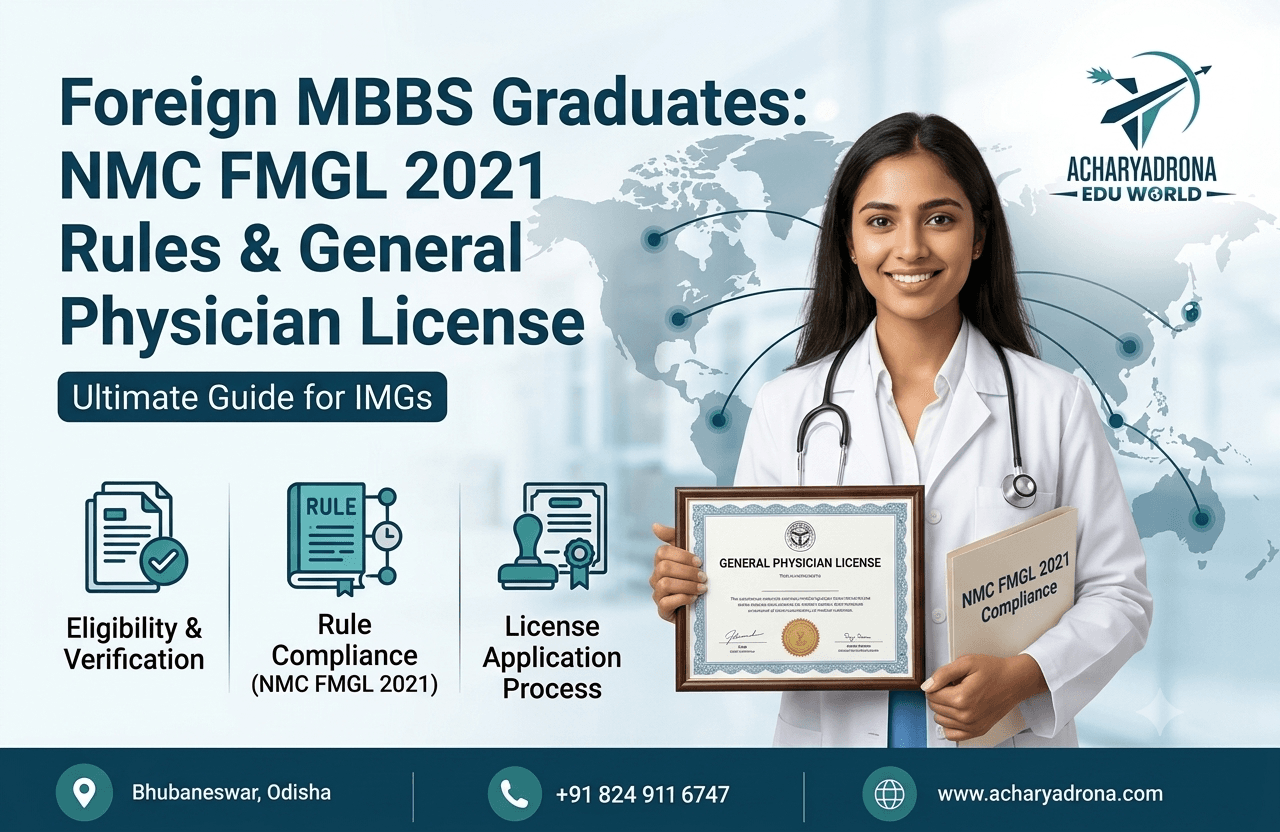
Foreign MBBS Graduates: NMC FMGL 2021 Rules & General Physician License
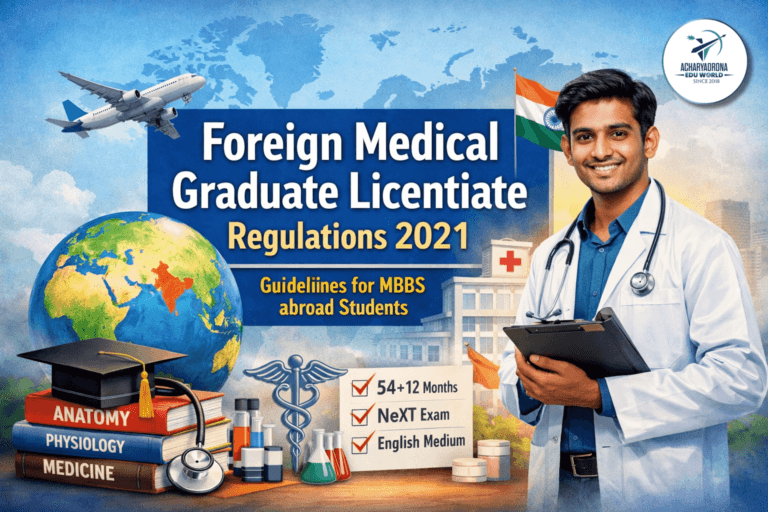
The National Medical Commission (NMC) now regulates medical licensing in India, replacing the old Medical Council of India (MCI) rules. A valid medical license in India (often called a “general physician” license) is simply permanent registration under NMC, which allows an MBBS doctor to practice medicine independently. Indian MBBS graduates get licensed automatically after finishing college and internship; foreign graduates (FMGs) face additional tests. The Foreign Medical Graduate Licentiate (FMGL) Regulations, 2021 (effective 18 Nov 2021) set new criteria for FMGs. Key points: foreign MBBS must now be 54 months + 12 months internship abroad with English instruction, followed by a 12-month internship in India and passing the National Exit Test (NExT) for permanent registration. These rules only apply to students who started MBBS after Nov 18, 2021; older cohorts follow the previous FMG screening test rules. This blog breaks down the NMC/FMGL rules, contrasts them with pre-2021 norms, and provides a checklist and timeline for students/parents. All facts are drawn from official NMC/government sources.
Who is the NMC and Why It Matters
The National Medical Commission (NMC) is the central regulatory body for medical education and practice in India. Established by the NMC Act, 2019 (effective Sept 2020), it replaced the old MCI. NMC oversees medical colleges, sets standards for curricula, conducts licensing exams, and maintains the national medical register. In particular, NMC is empowered to set rules for foreign MBBS graduates seeking to practice in India.
NMC issues medical licenses through permanent registration. According to NMC regulations, “Permanent Registration” is the registration that “permits or provides license to an individual to independently practice modern scientific system of medicine or allopathy in India”. In simpler terms, once a doctor (Indian or foreign) obtains permanent registration from NMC (or the earlier MCI), they have a valid medical license to work as a general physician in India.
NMC FMGL Regulations 2021: Scope and Key Provisions
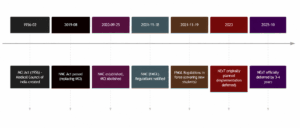
In November 2021, NMC notified the Foreign Medical Graduate Licentiate (FMGL) Regulations, 2021, which govern licensing of MBBS graduates from abroad【44†L238-L247】. Key definitions and rules from the gazette notification include:
- Foreign Medical Graduate (FMG): Anyone without an Indian MBBS degree seeking an Indian medical license.
- Scope: FMGL rules apply to any student who enrolls in or graduates from a foreign MBBS program after 18 Nov 2021. Those who graduated or started before that date are exempt and follow the old regulations.
- Degree Requirements:
- MBBS duration must be at least 54 months (4.5 years) of coursework plus 12 months internship at the same foreign college.
- The medium of instruction must be English (or an officially certified equivalence).
- The curriculum must cover all mandatory subjects listed in the NMC schedule (equivalent to India’s MBBS syllabus).
- Foreign Licensing: The graduate must hold a valid medical license (or be eligible for one) in the country where they studied, equivalent to that country’s general physician license. In practice, this means completing the degree and internship in that country, since most countries issue a provisional license after internship.
- Indian Internship: All FMGs (post-2021 entrants) must undertake a 12-month supervised internship in India in an NMC-approved hospital. This must be applied for via NMC and done after returning to India. This bridges any differences between foreign and Indian clinical training.
- Exit Exam: FMGs must clear the NMC’s National Exit Test (NExT) before registration. NExT has effectively replaced the older FMGE (Screening Test) as the licensing exam for foreign graduates (and final-year Indian graduates).
In summary, the FMGL 2021 rules ensure a foreign MBBS degree is substantially equivalent to an Indian MBBS: similar course length, English instruction, mandatory subjects, plus a bridging internship and exit exam.
“General Physician” License in India: IMG vs FMG
A “general physician license” in India isn’t a special separate certificate—it simply means full registration to practice medicine. For Indian Medical Graduates (IMGs) (those with MBBS from India), the process is straightforward: after completing 4.5 years of study + 1 year internship, they apply to their State Medical Council for permanent registration. (There is no additional exam beyond the final year MBBS examination.) Once permanent registration is granted, they are legally licensed to practice as general physicians.
For Foreign Medical Graduates (FMGs), the process is more elaborate. Historically (pre-2021), an Indian citizen (or OCI) with a foreign MBBS had to pass the FMGE (Screening Test) before getting registered. Under the current NMC rules:
- Indian MBBS (IMG): Must still complete the NMC-mandated final year exam (NExT from 2023 onward) and internship. Upon passing, they receive permanent registration easily (no FMGE required).
- Foreign MBBS (FMG) after Nov 2021: Must satisfy all FMGL 2021 criteria (54+12, English, foreign license) and complete 12 months Indian internship and clear the NExT exam. Only then is permanent registration granted. (The Indian internship and NExT effectively replace the older FMGE requirement.)
For example, NMC’s own summary states that to grant registration, a foreign graduate must have completed a 54-month course + 12-month internship, with English instruction, plus a 12-month supervised internship in India, and have cleared NExT.
Comparing Old vs New Rules (Pre- vs Post-18 Nov 2021)
| Aspect | Before 18 Nov 2021 (MCI Screening Test Regulations, 2002) | After 18 Nov 2021 (NMC FMGL Regulations, 2021) |
|---|---|---|
| Who must follow it | Indian citizens (and OCI) with foreign MBBS admitted after March 2002. | All foreign MBBS graduates enrolled after 18 Nov 2021. Older batches are exempt. |
| Duration Required | Typically 5.5 years including internship. No explicit minimum duration rule. | Minimum 54 months study + 12 months internship in the same foreign institution. |
| Foreign Internship | Required as part of MBBS, but not explicitly mandated. | Mandatory 12-month foreign internship. |
| Course Language | No language requirement. | English medium required. |
| Foreign Licensure | Degree should be recognized abroad. | Must be eligible for a medical license in that country. |
| Indian Internship | Not mandatory. | Mandatory 12-month supervised internship in India. |
| Exit Exam | FMGE (50% marks required). | NExT (when implemented). |
| Registration Process | Pass FMGE → Registration → Permanent registration. | Meet FMGL criteria → Indian internship → NExT → Permanent registration. |
| Exemptions | No special exemption except pre-2002 qualifications. | Students enrolled before 18 Nov 2021 are exempt from FMGL 2021. |
This table highlights the stricter post-2021 rules. Notably, the Indian internship and English-medium requirement are new, ensuring foreign MBBS are closely aligned to Indian standards.
Checklist for Students/Parents
Before Taking Admission Abroad (Checklist):
- College Recognition: Verify the foreign university and MBBS program are officially recognized in that country. Check the NMC official list or AIU for equivalence.
- Course Details: Ensure the MBBS is at least 54 months of study plus a 12-month internship at the same college. Beware of split programs.
- Language: Confirm English is the medium of instruction or that the college provides an official English certificate.
- Eligibility Certificate: If Indian citizen, obtain NMC eligibility (previously MCI EC) before admission; some countries require this for visa.
- Curriculum: Compare subjects with Indian MBBS syllabus (especially clinical subjects). Prefer curricula similar to the 1997 Indian guidelines.
- Foreign Licensure: Find out whether graduates of that program automatically receive a medical license or if additional exam is needed abroad. This is often required by NMC.
- Previous Grads: Check if alumni from that college got an NMC license (FMGE/NExT pass rates). Low pass rates may indicate curriculum gaps.
- Seat Guarantees: Some universities reserve few seats for Indians. Confirm your seat is reserved or easily available.
After Returning to India (Checklist):
- NMC Eligibility Certificate: Apply to NMC for an Eligibility Certificate to appear in the exit exam (if Indian citizen).
- Indian Internship: Find an NMC-approved hospital or medical college to serve 12-month internship. NMC may have a list. Complete required internship logs as per NMC (similar to domestic interns).
- National Exit Test (NExT): Prepare for the NExT exam. Note: As of 2023, FMGE has been replaced by NExT.
- Documents: Keep the following ready: foreign degree certificate, mark sheets, internship completion certificate from abroad, passport, NMC Eligibility/approval letters, identity proofs, photos, and English translations if needed.
- State Medical Council Registration: Once all conditions are met (internship + NExT pass), apply for permanent medical registration with any State Medical Council via NMC’s portal.
Red Flags to Avoid:
- Colleges boasting “MBBS in 5 years including internship” without a full 1-year internship component.
- Institutions not listed in WHO/FAIMER directories (now WDMS by WFME/NMC).
- Promises of skipping Indian internship or easy FMGE preparation as a guarantee.
- Dual-curriculum programs (e.g. 5+1 where internship is outside main college) – can disqualify you under NMC rules.
Pathway to Indian Medical License (Foreign MBBS)
Common Misconceptions
- Any WHO-listed university is automatically NMC-approved. NMC requires that the degree meet its criteria (54+12, English, etc.). Simply being in a global directory does not guarantee licensing eligibility. Always confirm NMC or GOI recognition.
- Passing NEET is enough. NEET (UG) is needed to go abroad, but medical licensing in India also requires completing all NMC conditions after graduation.
- FMGE exam is mandatory for all foreign grads. No – FMGE (Screening Test) was replaced by NExT as the qualifying exam by 2023. Under FMGL 2021, foreign grads must clear NExT instead.
- I can practice on temporary license. In India, provisional registration (for internship) is only valid during training. Independent practice requires permanent registration.
- Online classes or partial course abroad count. FMGL regulations state no part of the foreign MBBS (course or internship) can be done in India. Also, online theory that substitutes clinical training may not be recognized.
FAQs
1. What are the NMC FMGL 2021 Rules?
The NMC FMGL 2021 Rules are regulations introduced by the National Medical Commission to define the eligibility requirements for foreign medical graduates who want to obtain a medical license and practice in India.
2. Who is considered a Foreign Medical Graduate (FMG)?
A Foreign Medical Graduate (FMG) is an Indian citizen or Overseas Citizen of India (OCI) who earns a primary medical qualification (MBBS or equivalent) from a recognized medical university outside India.
3. What is a General Physician License in India?
A General Physician License is the permanent registration granted by the NMC or a State Medical Council that legally allows a doctor to diagnose patients, prescribe medicines, and practice modern medicine in India.
4. What is the minimum course duration required under the FMGL 2021 Regulations?
The foreign medical program must include at least 54 months (4.5 years) of academic study along with a continuous 12-month internship as required by the NMC.
5. Is a one-year internship abroad compulsory?
Yes. Under the FMGL Regulations 2021, students admitted after 18 November 2021 are generally required to complete a 12-month internship in the same foreign medical institution where they studied.
6. Can I transfer to another university during my MBBS abroad?
Generally, no. The NMC requires students to complete their medical education and internship in the same foreign medical institution to meet FMGL eligibility requirements.
7. Is English mandatory for studying MBBS abroad?
Yes. The medical course should be taught in English, including lectures, clinical training, and examinations, to comply with NMC guidelines.
8. Do foreign MBBS graduates need a license in the country where they studied?
Yes. Foreign medical graduates should be eligible for or obtain the required registration or license to practice medicine in the country where they completed their medical degree, as per applicable regulations.
9. Can foreign MBBS graduates directly practice in India?
No. Completing an MBBS abroad does not automatically allow medical practice in India. Graduates must meet the latest NMC eligibility and licensing requirements before obtaining registration.
10. What is the difference between an Indian Medical Graduate (IMG) and a Foreign Medical Graduate (FMG)?
An IMG completes MBBS from an NMC-approved medical college in India, while an FMG earns a medical degree from a recognized university outside India and must fulfill additional NMC requirements for registration.
11. Why were the FMGL 2021 Rules introduced?
The regulations were introduced to ensure that foreign medical graduates receive education and clinical training comparable to Indian MBBS standards while maintaining high-quality healthcare.
12. Do the FMGL 2021 Rules apply to students admitted before 18 November 2021?
Generally, no. Students who started their medical education before 18 November 2021 are usually governed by the earlier regulations, subject to the applicable transition provisions.
13. How can students verify whether a foreign medical university follows NMC rules?
Students should review the university’s curriculum, internship structure, language of instruction, local licensing eligibility, and confirm that it complies with the latest NMC FMGL Regulations before taking admission.
14. What mistakes should students avoid before choosing an MBBS abroad university?
Avoid selecting a university without checking:
- NMC compliance
- Course duration
- Internship availability
- English-medium teaching
- Local medical registration eligibility
- Recognition and accreditation
Researching these points can help prevent future licensing problems.
15. Is MBBS abroad still a good career option for Indian students?
Yes. MBBS abroad continues to be a good option for many students, provided they choose an NMC-compliant medical university, understand the latest regulations, and plan their medical career carefully from the beginning.
16. Can an Indian study MBBS online in a foreign college?
No. FMGL 2021 explicitly bars any part of foreign medical training being done in India. Only full-time, in-person study abroad qualifies.
17. Do I need a separate license from that country’s medical board?
You need to meet that country’s requirements (usually completion of the full program including internship). NMC requires you to be “competent to be licensed” there, which is typically automatic after internship. You don’t need a separate exam unless that country mandates one.
18. What if I graduated just before Nov 2021?
You follow the pre-2021 rules (FMGE/Screening Test). Those who graduated before or started MBBS before Nov 18, 2021 are exempt from the new FMGL internship/NExT requirement.
19. How soon after graduating abroad can I get my Indian license?
For post-2021 grads, after finishing your 6-year course abroad, you must do 1 year internship in India and pass NExT. Practically, you’ll get your license around 7–8 years after entering MBBS abroad (assuming no gaps).
Contact Us:
 Call: 9114439351/6371680309 |
  Bhubaneswar, Odisha
Visit Our Website: www.acharyadrona.com
Visit Us: Plot K3B/541, 1st Floor, Ghatikia Main Road, Near Saraswati Sishu Mandir, Kalinganagar, Bhubaneswar, Odisha 751003